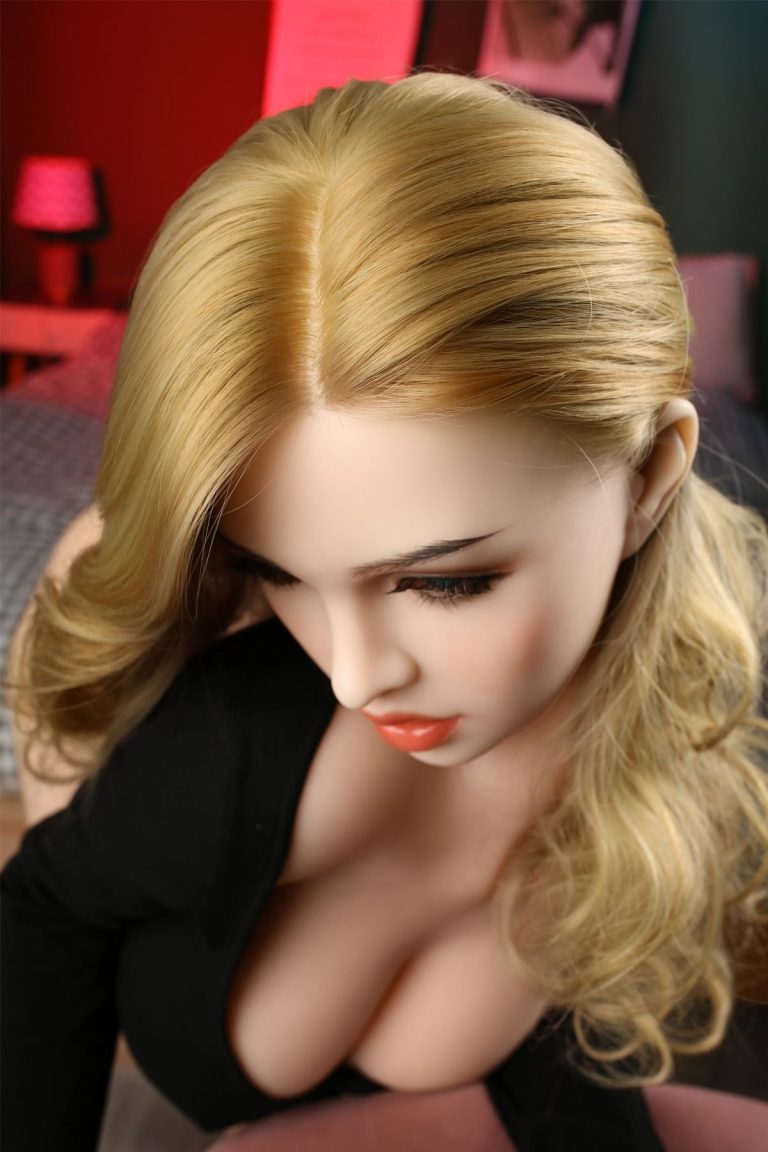
Kyoichi Tsuzuki reflects on his 2016 Shibuya exhibition “God Dwells in the Genitals – Kyōichi Tsuzuki Presents Erotopia Japan,” which showcased Japan’s erotic culture and featured a variety of love dolls from Orient Industry, including pieces from its “furniture series,” a full-body doll, and detachable models. The unexpected dominance of female visitors—who approached the dolls with uninhibited curiosity—and the stark contrast with male attendees’ awkward hesitation sparked his contemplation on the essence of these creations. He further delves into the history of Orient Industry, founded by Hideo Tsuchiya, tracing its evolution from simple inflatable dolls to sophisticated silicone companions, and explores how these dolls have transcended their utilitarian purpose to become objects of emotional comfort, art, and human connection.
In the summer of 2016, I organized an exhibition at “Akko Barū,” a gallery located in Shibuya adjacent to Tokyu Bunkamura and just across the street from a group of love hotels. Titled “God Dwells in the Genitals – Kyōichi Tsuzuki Presents Erotopia Japan,” the show was a photographic exploration of Japan’s distinctive erotic culture since the 1990s, encompassing hidden treasure museums, love hotels, and cosplay cafés—all strictly for visitors aged 18 and above.
Initially, I felt anxious about the gallery’s location, fearing it might deter potential visitors or attract unwanted attention. To my great surprise, however, the exhibition drew over 10,000 attendees—far exceeding our most optimistic expectations. Beyond the photographs adorning the walls, we also displayed a collection of eccentric and niche items: mannequins from old secret museums, and even real love dolls borrowed from Orient Industry. What shocked both me and the gallery staff was that 70 to 80 percent of the visitors were women, mostly young women. Photography was permitted throughout the exhibition, and I still clearly recall groups of girls cheerfully taking selfies with the mannequins and love dolls, while single men lingered awkwardly in the background—a scene that felt like a vivid snapshot of a shifting social era.
Orient Industry provided a variety of dolls for the exhibition: pieces from their “furniture series” (such as a doll integrated into a bookshelf), a full-body doll, and two detachable “holes” designed for sexual use. We marked these items as “touchable” and “feel-testable,” hoping that everyone could experience the lifelike texture of the silicone material. We even placed wet wipes nearby with signs instructing, “Please wipe your fingers before touching, and handle gently.” Yet men hesitated, often only daring to touch a thigh timidly. In contrast, women approached boldly—grabbing breasts or pinching nipples without the slightest hesitation—leaving the staff on edge as they watched this uninhibited curiosity.
Near the bar counter, we set up a curtained-off booth containing one of the “holes,” inviting visitors to slide their fingers inside to feel its tightness and folds. Once again, women jumped right in, swirling their fingers around and laughing as they exclaimed, “It’s just like me!” I almost wanted to joke back, “It’s even better than you,” but in that moment, I realized how outdated my own perceptions had become.
What kind of artificial object could make a 20-year-old woman say, “It’s just like me”? The female visitors posed a straightforward question: If a single “hole” could deliver such realistic pleasure, why would anyone spend thousands of yen on a full-body doll—going to the trouble of choosing its clothes, dressing it, adding scents, celebrating birthdays with cake, and living with it as a partner? This confusion was not unique to Japanese women; foreign visitors, both Western and Asian, shared the same bewilderment.
When you see and touch Orient Industry’s dolls in person, their realism is truly astonishing. But the women’s question—“Is such extreme realism really necessary just for masturbation?”—cuts to the core of what these dolls truly are. I have written and spoken about this before, but the very heart of “craftsmanship” lies in the pursuit of perfection. Consider a mastercrafted sake cup, created through years of refinement to offer the ultimate drinking experience. Yet there is another type of cup: one that is almost awkward to drink from but so beautiful to look at—prioritizing aesthetics over utility. Craftsmanship might dismiss it as impractical, but its charm lies in transcending mere function. Perhaps that is what we call “art.”
For me, Orient Industry’s dolls are not special merely because they look incredibly lifelike—they go beyond the line of “necessary realism.” They are not just tools for “intense pleasure and maximum orgasm”; instead, they occupy another realm of bliss. Much like hyper-realistic paintings, fantasy thrives in that space beyond realism—it is a realm of obsession and enchantment.

The evolution of Orient Industry’s products is fascinating: from simple inflatable “air dolls” with holes to highly realistic silicone companions. Curious about this journey, I visited the company’s showroom in Ueno and its factory in Katsushika a few years ago, where I had the opportunity to speak with founder Hideo Tsuchiya. I later included this interview in my book Tokyo Right Half, which featured a love doll on its cover. Now, in celebration of Orient Industry’s 40th anniversary, I am reprinting and expanding that original article, hoping that readers will gain a deeper understanding of the sincere intentions behind these dolls—and perhaps view their expressions in a new light.
Inside Orient Industry: The Ueno Showroom
On the quiet second floor of a building along Showa Street in Ueno, dozens of exquisitely crafted dolls sit under soft, warm lighting. Ranging from the “girl-next-door” style to micro-adults, some are dressed in everyday clothes, while others are nearly nude. They face visitors with calm, silent smiles—they are not humans, but Orient Industry’s flagship creations, the most meticulously crafted love dolls in Japan.
Founded in 1977 in Taitō-ku, Orient Industry is Japan’s largest and most meticulous manufacturer of love dolls, with showrooms in Ueno and Osaka. Its founder, Hideo Tsuchiya, was born in Yokohama in 1944 and took an unusual career path: he left his job as a salaryman to become an adult toy retailer. “I was born in Mugita, Yokohama, near Motomachi—which is very fashionable, unlike Mugita,” he laughed as he told me. “I worked as a salaryman until I met someone who ran an adult toy store in Shinjuku’s legendary Kabukichō district (which has since changed dramatically). I liked the idea of this ‘soft’ business and thought, why not give it a try? I moved from Yokohama to Tokyo, working between Shinjuku and Ueno, and then opened my own store in Asakusa in the late 1960s and early 1970s, which I ran for several years.”
During that era, adult toy shops were thriving, but authorities imposed strict regulations—even depictions of pubic hair in magazines were considered scandalous. Tsuchiya expanded his business to two stores in Asakusa, selling inflatable sex dolls (known as “dutch wives”), vibrators for women, and sponge toys for men. When motorized products entered the market, they disguised them as folk crafts with funny faces to avoid running afoul of regulations—something unthinkable today, when sex toy stores in Akihabara openly stock realistic phallic toys.
Working in the store every day, Tsuchiya noticed that the inflatable dolls, which sold for ¥10,000 to ¥20,000, were often of poor quality—easily tearing under pressure. He also realized that many of his customers were not kink enthusiasts, but rather men with disabilities, emotional trauma, or those who struggled to form relationships with women. This moved him to create something more than just a sexual tool—something that could sit beside someone and provide emotional comfort.
When he wrapped these cheap inflatable dolls in nice craft paper labeled “Antarctica” and sold them at a higher price, they surprisingly sold well. However, the dolls still broke frequently—like punctured balloons. Recognizing that poor aesthetics damaged the public’s perception of these products, Tsuchiya was determined to improve their quality and design.
In 1977, Orient Industry launched its first original product: Hohoemi (“Smile”), a doll with a soft vinyl face and breasts, a reinforced urethane waist, and inflatable body segments. Around the same time, Tsuchiya met Dr. Sasaki, a former physician from Kyoto about 10 years his senior, who had experience making dolls for people with disabilities. Sasaki brought a new perspective to the business, treating these dolls with seriousness rather than dismissing them as a fringe novelty. He even set up a “Ueno counseling room” where he offered sexual consultations, often lasting over an hour.
Through these consultations, Tsuchiya and his team learned that the needs of their customers were diverse: they included not only people with disabilities, but also men whose partners had left them, women who had lost intimacy in their lives, and mothers caring for disabled sons. The counseling process soon became a vital part of their business, helping them better understand and meet the emotional needs of their clients.
Following Hohoemi, Orient Industry released a series of full-body dolls with detachable limbs: Omokage (1982), Kagemi (1987), and Eika (1992)—all latex dolls with calm, somber expressions. In 1997, they launched Hana Sannin-shimai (“The Flower Sisters”), still made of latex but featuring brighter, more everyday-friendly designs.
A major turning point came in 1996 with the arrival of Real Doll, silicone dolls crafted in California that sold for $6,000 to $7,000 each. Japanese manufacturers, including Orient Industry, rushed to develop their own silicone models. After two years of research and development and securing high-quality silicone materials, Orient Industry released Jewel in 2001. In 1999, their sofubi Alice series—shaved dress forms standing 136 cm tall—became an unexpected hit, selling 100 to 150 units per month. These dolls attracted younger customers seeking “healing” rather than purely erotic use, and even spawned fan clubs—something unheard of for adult products at the time.
A secondary market soon emerged, with used dolls being resold. Some owners donated their dolls to be “re-homed,” believing that the dolls had “feelings” shaped by how they were treated. Dealers even began facilitating private transfers to protect the privacy of both buyers and sellers.
As the stigma surrounding doll ownership faded, Orient Industry expanded its product lineup. Some collectors now own more than 10 dolls, transforming entire rooms into giant “dollhouses” and even swapping out doll heads to change their appearance. Buyers can customize nearly every feature, from skin tone to breast size and shape; interestingly, some women prefer dolls without genitals, viewing them as objects of comfort or healing. The possibilities for customization are nearly endless.
These latex, vinyl, and silicone dolls have absorbed decades of human desire, imagination, and emotion. Orient Industry refers to the delivery of a doll as a “marriage” and the return of a doll as a “homecoming.” Dolls that are returned and treated with care often have a more serene appearance—something that American doll companies do not prioritize. This gentle, nuanced bond between owner and doll is deeply rooted in Japanese culture.
Orient Industry’s showroom and headquarters remain in Ueno, while its factory is located in Katsushika—a district with a long history of toy manufacturing. Faced with an aging network of contract manufacturers, Orient Industry built its own factory in 2004. Between 2003 and 2004, a trend for “doll brothels” even swept Japanese TV, and the company produced roughly 1,000 dolls per year during that period. Today, they still sell around 1,000 dolls annually, with prices ranging from ¥100,000 to ¥700,000 depending on the body type and customization options.
Orient Industry accepts custom orders, including, on occasion, dolls modeled after loved ones. However, some requests turned dark—such as people using stolen photos to create dolls resembling others—so the company has temporarily paused these services. The facial designers at Orient Industry warn that copying a person exactly can result in a corpse-like appearance. Instead, they “positively idealize” human beauty, adjusting proportions, skin tones, breast texture, and even nipple color to craft a fantasy “dream woman” who feels truly alive and romantic in one’s space.
In a lively downtown factory on the outskirts of Tokyo, staffed by dedicated young artisans, these craftspeople quietly fulfill humanity’s deepest desires—creating dolls that are far more than mere objects, but companions, works of art, and symbols of connection in an increasingly disconnected world.